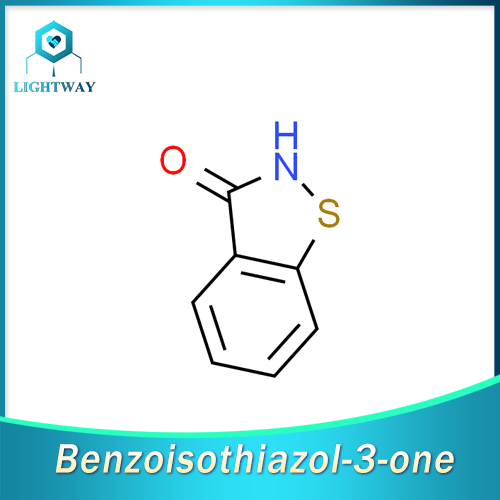


| Parameter Category | Parameter Name | English Value/Specification |
| Basic Identification | Chemical Name | 1,2-Benzisothiazolin-3-one |
| Abbreviation | BIT | |
| CAS Registry Number | 2634-33-5 | |
| EINECS Number | 220-120-9 | |
| Molecular Formula | C₇H₅NOS | |
| Molecular Weight | 151.19 g/mol | |
| Physicochemical Properties | Appearance | White to pale yellow crystalline powder |
| Melting Point | 155–158 °C | |
| Water Solubility | ~0.14% at 25 °C; 1.5% at 90 °C | |
| pH Value (10% Aqueous Solution) | 9.0–11.0 | |
| Thermal Stability | Stable below 180 °C | |
| Solubility in Organic Solvents | Soluble in polar organic solvents (e.g., alcohols, ketones); slightly soluble in non-polar solvents | |
| Biological Activity | Antimicrobial Spectrum | Broad-spectrum (effective against bacteria, fungi, and algae) |
| Mechanism of Action | Inhibits microbial enzyme activity by binding to -SH groups of intracellular proteins | |
| Typical Dosage Range | 0.05%–0.5% (by mass, depending on application scenarios) | |
| Industrial Formulations | Common Commercial Grades | BIT-20 (20% BIT in ethylene glycol aqueous solution); BIT-10 (10% BIT formulation) |
| Formulation Feature | Easy to disperse, long-term preservative effect, stable under alkaline conditions | |
| Safety & Environmental Indicators | Skin Irritation | Irritating to skin and eyes; requires protective equipment during operation |
| Sensitization Risk | May cause skin sensitization with prolonged contact | |
| Biodegradability | Biodegradable in natural environment with no persistent residues | |
| Aquatic Toxicity | Highly toxic to aquatic organisms; avoid release into water bodies |


