

Wesentliche Details
Versand:快递, 空运, 陆运, 海运
Produkteinführung
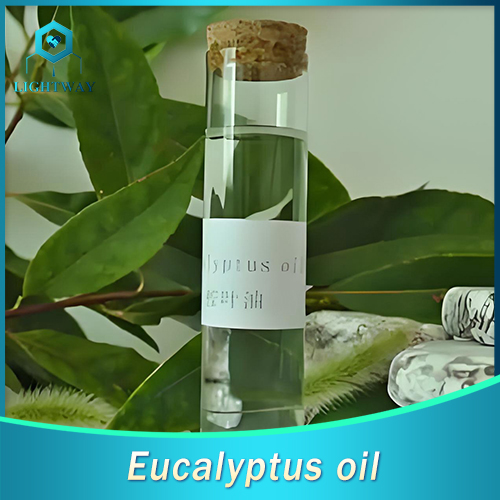
Eucalyptus oil is the generic name for distilled oil from the leaves of Eucalyptus, a genus of the plant family Myrtaceae, mostly native to Australia but cultivated worldwide. Eucalyptus oil has a history of wide application, as a pharmaceutical, antiseptic, repellent, flavouring and fragrance, as well as having industrial uses. The leaves of selected Eucalyptus species are steam distilled to extract eucalyptus oil.
Types and production
In the trade, eucalyptus oils are categorized into three broad types according to their composition and main end-use: medicinal, perfumery and industrial. The most prevalent is the standard cineole-based "oil of eucalyptus", a colourless mobile liquid (which yellows with age), having a penetrating, camphoraceous, woody-sweet scent.
China produces about 75% of the world output.
Eucalyptus polybractea or Blue-leaf Mallee, a species yielding high-quality eucalyptus oil
Global production is dominated by oil from Eucalyptus globulus. However, Eucalyptus kochii and Eucalyptus polybractea have the highest cineole content, ranging from 80 to 95%. The British Pharmacopoeia states that the oil must have a minimum cineole content of 70% if it is pharmaceutical grade. Rectification is used to bring lower grade oils up to the high cineole standard required. In 1991, global annual production was estimated at 3,000 tonnes for the medicinal eucalyptus oil, with another 1,500 tonnes being for the main perfumery oil, produced from Eucalyptus citriodora. The eucalyptus genus also produces non-cineole oils, including piperitone, phellandrene, citral, methyl cinnamate and geranyl acetate.
Uses
Herbal medicine
Eucalyptus oil is a common ingredient in decongestant formulations. The European Medicines Agency Committee on Herbal Medicinal Products concluded that traditional medicines based on eucalyptus oil can be used for treating cough associated with the common cold, and to relieve symptoms of localized muscle pain.
Repellent and biopesticide
Cineole-based eucalyptus oil is used as an insect repellent and biopesticide. In the U.S., eucalyptus oil was first registered in 1948 as an insecticide and miticide.
Cineole-based eucalyptus oil is used as an insect repellent and biopesticide. In the U.S., eucalyptus oil was first registered in 1948 as an insecticide and miticide.
Flavouring and fragrance
Cineole-based eucalyptus oil is used, at low levels (0.002%), as a flavouring in various products, including baked goods, confectionery, meat products and beverages. Eucalyptus oil has antimicrobial activity against a broad range of food-borne human pathogens and food spoilage microorganisms.
Cineole-based eucalyptus oil is used, at low levels (0.002%), as a flavouring in various products, including baked goods, confectionery, meat products and beverages. Eucalyptus oil has antimicrobial activity against a broad range of food-borne human pathogens and food spoilage microorganisms.
Non-cineole peppermint gum, strawberry gum and lemon ironbark are used as flavouring. Eucalyptus oil is also used as a fragrance component to impart a fresh and clean aroma in soaps, detergents, lotions, and perfumes. It is known for its pungent, intoxicating scent. Due to its cleansing properties, eucalyptus oil is found in mouthrinses to freshen breath.
Industrial
Research shows that cineole-based eucalyptus oil (5% of mixture) prevents the separation problem with ethanol and petrol fuel blends. Eucalyptus oil also has a respectable octane rating, and can be used as a fuel in its own right. However, production costs are currently too high for the oil to be economically viable as a fuel.
Research shows that cineole-based eucalyptus oil (5% of mixture) prevents the separation problem with ethanol and petrol fuel blends. Eucalyptus oil also has a respectable octane rating, and can be used as a fuel in its own right. However, production costs are currently too high for the oil to be economically viable as a fuel.
Phellandrene- and piperitone-based eucalyptus oils have been used in mining to separate sulfide minerals via flotation.
Cleaning
Eucalyptus oil is used in household cleaning applications. It is commonly used in commercial laundry products such as wool wash liquid. It is used as a solvent for removing grease and sticky residue.
Eucalyptus oil is used in household cleaning applications. It is commonly used in commercial laundry products such as wool wash liquid. It is used as a solvent for removing grease and sticky residue.
Safety and toxicity
If consumed internally at low dosage as a flavouring component or in pharmaceutical products at the recommended rate, cineole-based 'oil of eucalyptus' is safe for adults. However, systemic toxicity can result from ingestion or topical application at higher than recommended doses. In Australia, eucalyptus oil is one of the many essential oils that have been increasingly causing cases of poisoning, mostly of children. There were 2,049 reported cases in New South Wales between 2014 and 2018, accounting for 46.4% of essential oil poisoning incidents.
If consumed internally at low dosage as a flavouring component or in pharmaceutical products at the recommended rate, cineole-based 'oil of eucalyptus' is safe for adults. However, systemic toxicity can result from ingestion or topical application at higher than recommended doses. In Australia, eucalyptus oil is one of the many essential oils that have been increasingly causing cases of poisoning, mostly of children. There were 2,049 reported cases in New South Wales between 2014 and 2018, accounting for 46.4% of essential oil poisoning incidents.
The probable lethal dose of pure eucalyptus oil for an adult is in the range of 0.05 mL to 0.5 mL/per kg of body weight. Because of their high body-surface-area-to-mass ratio, children are more vulnerable to poisons absorbed transdermally. Severe poisoning has occurred in children after ingestion of 4 mL to 5 mL of eucalyptus oil.
Eucalyptus oil has also been shown to be dangerous to domestic cats, causing an unstable gait, excessive drooling, and other symptoms of ill health.
The known primary toxin in eucalyptus oil is eucalyptol.


