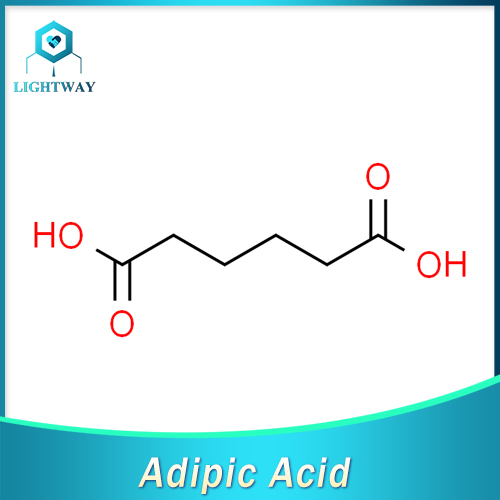


Essential details
Shipping:Express Delivery, Air freight, Land freight, Ocean freight
Product Introduction
Parameter Category | Specific Information |
Chemical Identity | IUPAC Name: Hexanedioic acid
Common Synonyms: Adipinic acid, Hexane-1,6-dioic acid
CAS No.: 124-04-9
Molecular Weight: 146.14 g/mol |
Physical Properties | Appearance: White crystalline powder or prisms
Odor: Odorless or slightly acidic odor
Density (25°C): 1.36 g/cm³
Melting Point: 152°C
Boiling Point: 337.5°C (decomposes slightly)
Flash Point (Closed Cup): 196°C
Solubility: Slightly soluble in water (1.4 g/100 mL at 20°C); soluble in ethanol, acetone, ethyl acetate; slightly soluble in benzene, cyclohexane |
Chemical Characteristics | Chemical Nature: Dicarboxylic acid with typical carboxylic acid properties (reacts with bases, alcohols, amines)
Typical Reactions: Esterification with alcohols to form diesters; amidation with amines to form diamides; decarboxylation at high temperature; condensation polymerization with diols/diamines to form polyesters/polyamides
Stability: Stable under normal temperature and pressure; non-flammable |
Main Production Methods | 1. Nitric acid oxidation of cyclohexanol/cyclohexanone (KA oil) – mainstream industrial method
2. Catalytic oxidation of cyclohexene with air or oxygen
3. Biotransformation method: Using microorganisms to convert renewable resources (e.g., glucose) into adipic acid
4. Hydrogenation of benzene to cyclohexane, followed by oxidation to KA oil and subsequent nitric acid oxidation |
Key Applications | Polymer Industry: Primary raw material for nylon 66 (polyhexamethylene adipamide) and polyurethane (PU) resins; monomer for polyester resins
Chemical Industry: Intermediate for plasticizers (e.g., diisononyl adipate), lubricants, and corrosion inhibitors
Food Industry: Food additive (acidulant, flavoring agent, pH regulator), permitted in beverages, jellies, and candies
Other Fields: Raw material for pharmaceuticals and cosmetics; component of electrolytes in some batteries |
Safety & Hazards | Toxicity Class: Low toxic
Exposure Routes: Inhalation of dust, skin contact, oral ingestion
Health Hazards: Dust may irritate respiratory tract and eyes; prolonged skin contact may cause mild irritation; oral ingestion in large amounts may cause gastrointestinal discomfort (nausea, vomiting)
Environmental Impact: Biodegradable in soil and water; low bioaccumulation potential |


