

Detalhes essenciais
Envio:快递, 空运, 陆运, 海运
Introdução do Produto
| Parameter | Details |
|---|---|
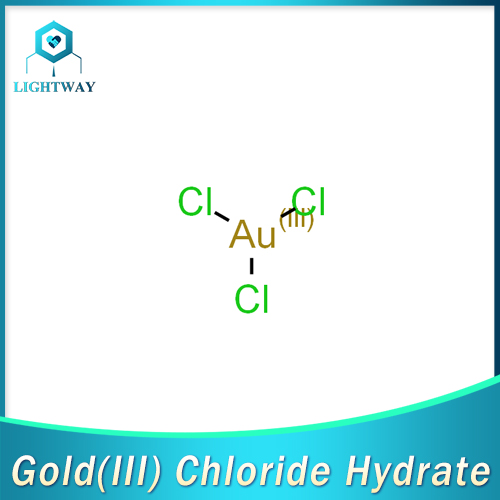
| Chemical Name | Gold(III) chloride hydrate; Trichloroauric acid hydrate |
| CAS Number | 27988-77-8 (hydrated form); Anhydrous: 13453-07-1 |
| Molecular Formula | AuCl₃·xH₂O (x usually = 1–3, common form: AuCl₃·2H₂O) |
| Molecular Weight | Variable with hydration degree; AuCl₃·2H₂O: 339.35 g/mol |
| Physical Appearance | Yellow to orange-red crystalline powder; Hygroscopic, deliquescent in moist air |
| Solubility | Soluble in water, ethanol, ether, chloroform, and dilute acids; Insoluble in carbon tetrachloride |
| Density | ~3.9 g/cm³ (solid, 25°C) |
| Decomposition | Loses water at ~100°C; Decomposes to metallic gold and chlorine gas at high temperatures |
| Primary Applications | 1. Electroplating: Gold plating for jewelry, electronic components (high conductivity coating)2. Catalysis: Catalyst in organic synthesis (e.g., oxidation, cyclization reactions)3. Nanomaterials: Precursor for gold nanoparticle preparation4. Analytical Chemistry: Reagent for detecting heavy metals and alkaloids |
| Safety & Hazards | - Toxic if ingested/inhaled; May cause skin/eye irritation and allergic reactions- Strong oxidizing agent; Reacts violently with reducing agents (e.g., sodium sulfite, organic matter) and ammonia- Releases toxic chlorine gas when heated or in contact with acids |
| Storage Requirements | Store in a sealed, light-resistant container under inert gas (e.g., nitrogen) in a cool, dry, well-ventilated area; Keep away from reducing agents, acids, and combustibles |
| Regulatory Notes | Subject to precious metal import/export regulations in most countries; Requires proper licensing for commercial trade; Classified as a hazardous chemical for transportation |


